
My Projectz

➜ Book a Free Consultation
Blog Post

No CQC Rating Yet?

CQC Not Yet Rated? What New Care Providers Should Do Before Bidding for a Tender

If you are searching for CQC not rated tender guidance, the most important thing to understand is that being CQC registered but not yet rated does not automatically mean you can or cannot bid. Each care tender can set different participation requirements, so new providers should check the exact CQC condition, understand what evidence the buyer will accept and confirm their wider tender readiness before spending valuable time and resources preparing a submission.

In This Article

Learn how to check CQC rating requirements, understand whether an unrated provider can participate, prepare the right evidence and make a practical bid, clarification or no-bid decision.

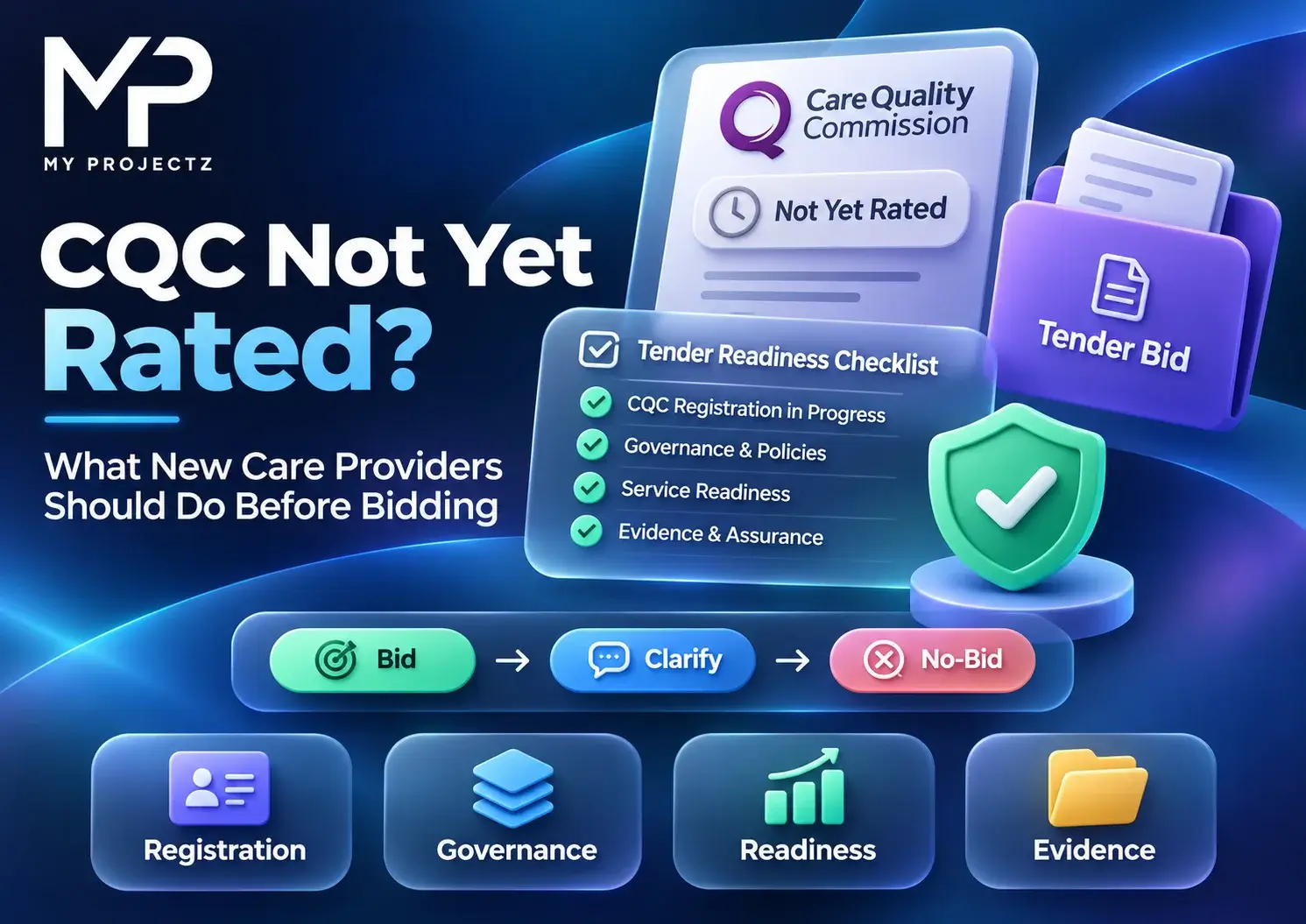
CQC not rated tender infographic for new care providers showing tender readiness, registration, governance, service readiness, evidence and bid or no-bid decisions

Why CQC Rating Requirements Matter in Care Tenders

CQC status can be an important part of healthcare tendering because commissioners need assurance that providers can deliver safe, effective and properly governed services. However, there is no universal rule saying that every care tender requires a Good or Outstanding rating. The buyer’s published conditions determine what is required, which means newly registered providers must read the procurement documents carefully rather than rely on assumptions from previous contracts.

Under the Procurement Act 2023, conditions of participation can relate to a supplier’s legal and financial capacity or technical ability, and they must be proportionate to the nature, complexity and cost of the contract. A supplier that fails a required condition may ultimately be excluded from progressing, which makes early eligibility checking particularly important.

CQC Not Rated Tender: 6 Things New Providers Should Do

Read the CQC Requirement Exactly

Check whether the tender requires CQC registration, a specific rating or accepts unrated providers before committing resources to the submission.

Check Which CQC Rating the Buyer Means

Confirm whether the requirement applies to your provider, registered location or specific regulated service before answering the tender question.

Prepare Alternative Evidence Where Allowed

Where unrated providers are accepted, prepare relevant governance, safeguarding, workforce and quality evidence that demonstrates your organisation’s readiness.

Ask a Clarification Question Early

If the CQC condition is unclear, ask the buyer through the procurement portal before investing substantial time in the tender.

Check Your Wider Tender Readiness

Review finances, insurance, staffing, geography, experience and mobilisation requirements alongside your CQC position before making a bid decision.

Make a Bid or No-Bid Decision

Proceed only when your organisation can meet the mandatory conditions or has received clear confirmation that an alternative route is permitted.

What Does CQC Not Rated Actually Mean?

CQC rates most applicable services using Outstanding, Good, Requires Improvement and Inadequate. It can also show an area as Not Rated where that part of a service has not yet been rated, and some types of services are not rated in the same way. Care Quality Commission

For services that have not previously been inspected or rated, CQC says it needs to assess all quality statements within a key question before publishing a rating. For newly registered services, CQC states that it will usually assess all quality statements within 12 months. Care Quality Commission

This distinction is important when completing a care tender because CQC registration and a published CQC rating are not the same thing. Providers should accurately describe their current regulatory position and avoid presenting registration as though it were a published inspection rating.

What Evidence Should an Unrated Care Provider Prepare?

Where a tender permits newly registered or unrated providers, prepare an organised evidence library before starting your bid. The purpose is to show that your organisation has appropriate governance, workforce, safeguarding, quality and operational systems in place even though it does not yet have a published inspection rating.

CQC itself requires new provider applicants to demonstrate how they will deliver safe, effective, caring, responsive and well-led services. Its registration guidance refers to supporting evidence such as policies, procedures, processes, contracts and staff induction and training arrangements. Care Quality Commission

Useful Evidence to Prepare

  • CQC Registration confirmation
  • Registered activities and locations
  • Safeguarding procedures
  • Safer recruitment processes
  • Staff induction and training
  • Quality assurance systems
  • Incident management procedures
  • Complaints management arrangements
  • Governance and audit processes
  • Business continuity arrangements
  • Mobilisation plans

Only provide evidence relevant to the buyer’s requirements. Strong tender evidence should demonstrate how your systems work in practice rather than simply supplying a large collection of generic policies.

Use Tender Search to Avoid Unsuitable Opportunities

New care providers can waste significant time pursuing opportunities that do not match their regulatory position, financial capacity or operational readiness. A structured Tender Search process helps identify important eligibility conditions before an opportunity enters your active bidding pipeline, allowing your team to concentrate on contracts that genuinely fit the organisation.

Tender suitability should also consider contract geography, turnover requirements, insurance, workforce expectations, previous experience and mobilisation timescales. Checking these factors early can reduce wasted bid-writing resources and help management make more informed commercial decisions.

Need Help With a Care Tender?

Being CQC registered but not yet rated does not automatically mean every healthcare tender is unavailable to your organisation. The important step is to understand the buyer’s exact conditions, identify what evidence is accepted and decide whether the opportunity genuinely matches your current regulatory, financial and operational position.

My Projectz provides tender writing support for healthcare and social care organisations, helping providers interpret tender requirements, organise evidence-led responses and prepare stronger submissions for suitable opportunities without wasting valuable resources on contracts that do not match their current position.

Leave a Reply

Your email address will not be published. Required fields are marked *