
My Projectz

➜ Book a Free Consultation
Blog Post

How UK Buyers Score Your Tender

Tender Scoring Criteria Explained: How UK Buyers Evaluate Bids

Tender scoring criteria determine how UK buyers assess bids and select suppliers. Buyers evaluate responses against published requirements, considering factors such as quality, price and service delivery. Understanding these criteria helps you prepare stronger answers, provide relevant evidence and focus on the areas that carry the most marks.
In This Article

Understanding how buyers evaluate tenders can help you prepare more competitive bids. This guide explains tender scoring criteria, how quality and price weightings work, what evaluators look for and practical ways to improve your responses. It also covers common scoring questions and important considerations for healthcare tenders.

Why Do Tender Scoring Criteria Matter?

Tender scoring criteria explain what buyers expect and how they award marks. They help suppliers understand which requirements matter most and where to focus their efforts.

Each tender may use different criteria and weightings. Reviewing them early helps you prepare relevant answers and decide whether the opportunity suits your business.

Looking for suitable opportunities? Explore our tender search service.

What Are Tender Scoring Criteria?

Tender scoring criteria are the standards used to assess and compare bids. They help buyers evaluate suppliers fairly against their published requirements.

Under the Procurement Act 2023, applicable contracting authorities must establish clear, measurable and proportionate award criteria.

Buyers typically distinguish between:

  • Conditions of participation: Whether a supplier has the required financial and technical capacity.

  • Award criteria: How well the tender meets requirements relating to quality, price and delivery.

Understanding both helps you prepare a more focused submission.

Source: Cabinet Office – Assessing Competitive Tenders.

How Do UK Buyers Evaluate Bids?

Buyers usually follow a structured evaluation process based on the tender documents.

Mandatory checks:

Buyers confirm that suppliers meet the relevant eligibility and participation requirements.

Quality assessment:

Evaluators assess delivery methods, experience, supporting evidence and the proposed approach.

Price assessment:

 Buyers evaluate costs using their published pricing methodology.

Final evaluation:

Scores are calculated and reviewed according to the stated assessment process.

A competitive bid should directly answer each question and explain how your organisation will meet the buyer’s expectations.

Our tender writing services help businesses prepare clear, evidence-led responses aligned with tender requirements.

What Do Buyers Look for in a Tender?

Although criteria vary between contracts, buyers commonly assess four areas.

Service Quality:

Your ability to deliver the required services consistently and effectively.

Price and Value:

Whether your pricing is competitive, realistic and sustainable.

Social Value:

Relevant social, economic or environmental benefits associated with the contract.

Mobilisation and Risk:

How you will start the contract, manage responsibilities and address potential problems.

Always follow the specific evaluation criteria provided by the buyer.

How Does Tender Scoring Work? A Simple Example

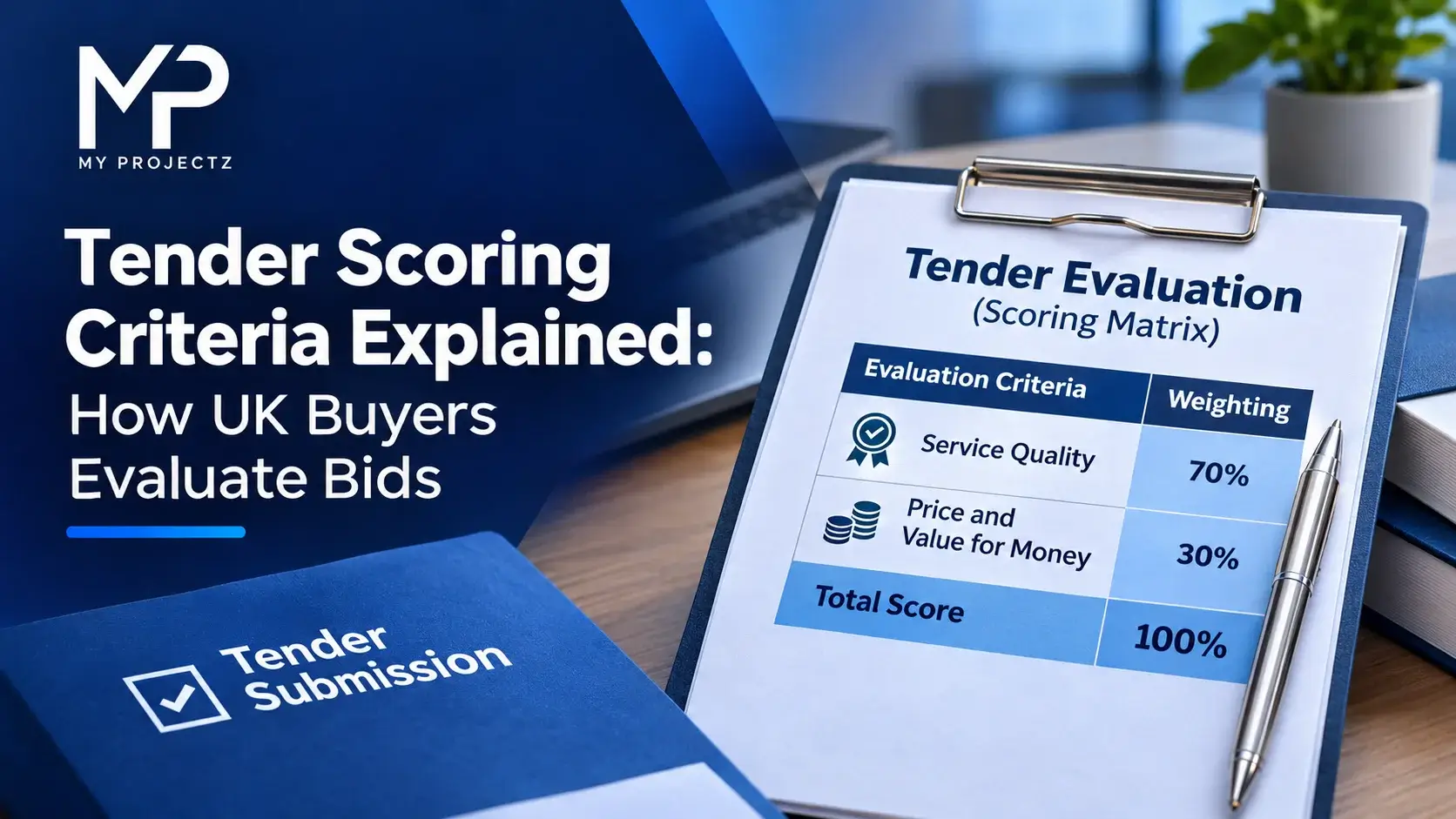
Tender weightings show how much each evaluation area contributes to the final score.

Imagine a tender with the following weighting:

70% Quality

30% Price

The buyer scores quality out of five and, in this example, calculates price marks using the lowest acceptable tender price divided by each supplier’s price.

Assessment

Supplier A

Supplier B

Quality marks

56

42

Price marks

25

30

Total score

81/100

72/100

Supplier A scores higher despite offering a more expensive service because its quality response achieves more marks.

Remember: This is an illustrative example. Actual scoring methods and minimum thresholds vary between tenders.

Reviewing your responses against the scoring matrix can help identify gaps before submission. Explore our tender review service for professional bid review support.

Are Healthcare Tenders Evaluated Differently?

Healthcare tender evaluations depend on the contract and applicable procurement rules.

For certain healthcare services in England, the NHS Provider Selection Regime applies. Its assessment approach can consider quality, value, collaboration, access, health inequalities and social value.

Other healthcare and social care contracts may follow different evaluation methods.

Source: NHS England – Provider Selection Regime Statutory Guidance.

For sector-specific assistance, explore our healthcare tendering services.

Four Ways to Improve Your Tender Score:

Understand the Scoring Criteria

Review the evaluation matrix, question weightings and mandatory requirements before writing.

Answer Questions Directly

Address every part of the question using clear, relevant information. Avoid unnecessary explanations.

Support Your Answers With Evidence

Include genuine examples, delivery procedures and measurable outcomes where available.

Review Before Submission

Check your responses against the scoring criteria, word limits and submission requirements.

Strong tender responses explain what you will deliver, how you will deliver it and what evidence supports your approach.

Conclusion, Strengthen Your Next Tender Submission

Understanding tender scoring criteria helps businesses prepare more focused, competitive bids. By addressing buyer requirements, prioritising important questions and providing relevant evidence, suppliers can improve the quality of their submissions.

Need Support With Your Next Tender?

At My Projectz, we support UK businesses with tender writing, evaluation requirements, pricing considerations and final bid reviews.

Book a free 30-minute consultation to discuss your tender requirements and discover how our team can support your next submission.

Leave a Reply

Your email address will not be published. Required fields are marked *