My Projectz

➜ Book a Free Consultation
Blog Post

No Case Studies Yet?

Build stronger tender evidence without overstating your experience.

How to Write a Tender Response When You Have No Strong Case Studies Yet

Writing a tender without case studies can feel difficult for a new or smaller provider. However, a limited case-study library does not automatically make your bid weak. Instead, use the strongest genuine evidence you have, including smaller projects, measurable results, team expertise and proven delivery systems.

In This Article

Learn what evidence you can use when strong case studies are missing and how to present it clearly without overstating your organisation’s experience.

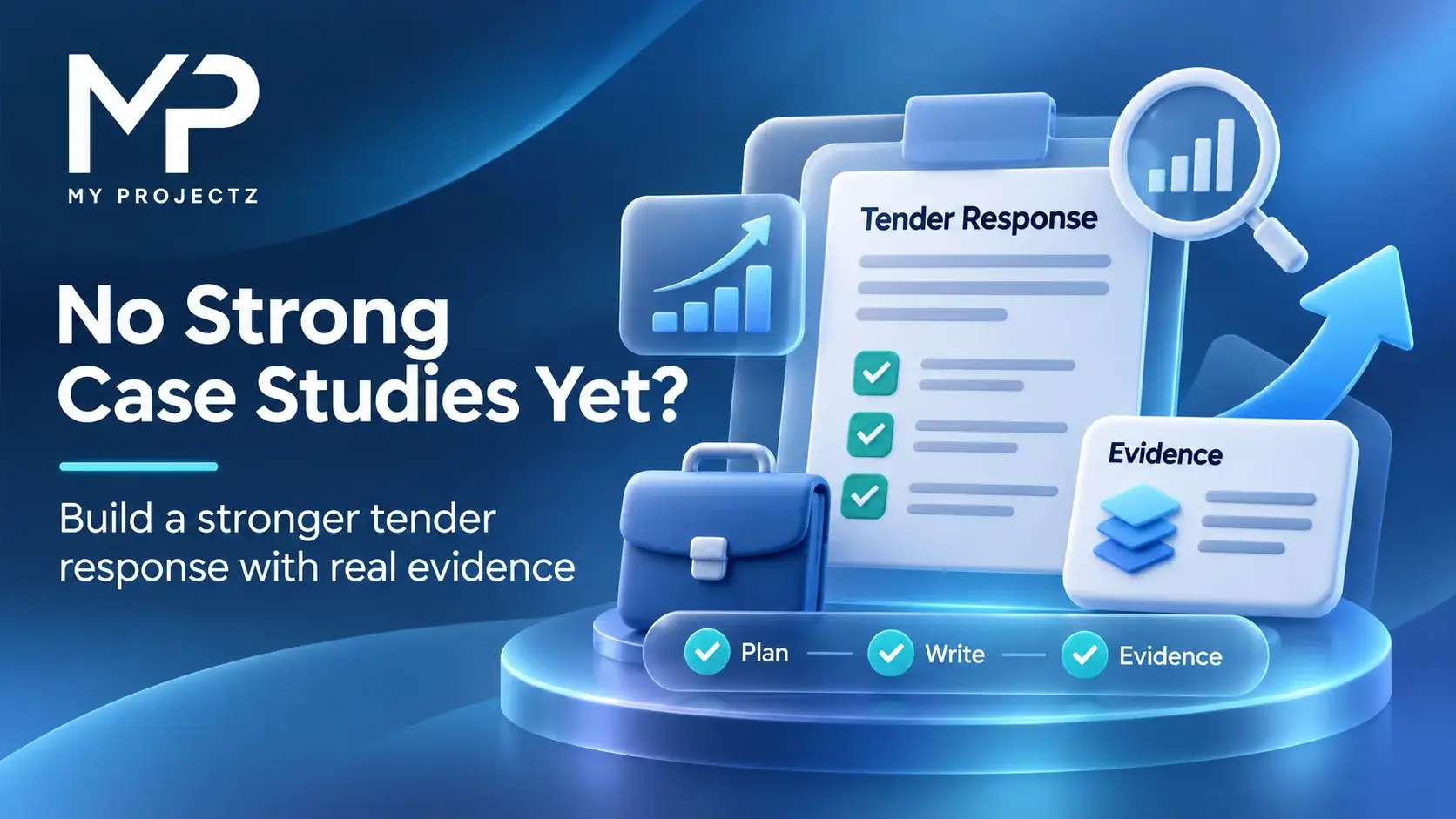
Tender without case studies infographic showing a stronger tender response built with real evidence, planning, writing and supporting proof

Why Case Studies Matter in Tender Writing

Buyers use case studies to understand whether a supplier has successfully delivered similar work before. A strong example normally demonstrates the challenge, your approach, measurable results and what was achieved for the client.

However, effective tender writing is not about forcing an unsuitable example into every answer. If you do not have a perfect case study, your priority should be finding the strongest relevant and verifiable evidence available.

UK government procurement guidance also encourages smaller suppliers to use real examples, clear evidence and honest explanations rather than relying on generic claims.

Tender Without Case Studies: 6 Ways to Strengthen Your Response

Show Measurable Results

Support your claims with genuine KPIs, feedback, audit results or service outcomes wherever relevant evidence is available.

Include Partner Experience

Where the tender permits it, relevant experience from delivery partners or subcontractors may help demonstrate wider contract capability.

Use Relevant Smaller Projects

Use smaller contracts, pilot projects or previous assignments that demonstrate skills directly connected to the buyer’s requirements.

Use Team Experience Carefully

Highlight relevant experience held by key staff but clearly distinguish personal experience from your organisation’s own contract history.

Demonstrate Strong Systems

Use governance, safeguarding, recruitment, quality assurance and mobilisation processes to show how your organisation will deliver effectively.

Be Honest About Gaps

Never invent experience. Explain the evidence you genuinely have and how your delivery approach reduces the buyer’s potential risk.

What Evidence Can You Use Instead?

When a perfect case study is unavailable, look for evidence that still proves capability. The strongest evidence is usually specific, measurable and directly connected to the requirement you are answering.

Useful evidence may include:

  • Smaller contract results
  • Pilot project outcomes
  • Client feedback
  • Relevant KPIs
  • Audit results
  • Staff qualifications
  • Leadership experience
  • Training records
  • Quality monitoring
  • Mobilisation plans

Only use evidence that is accurate and relevant to the question.

Can You Use Previous Employment Experience?

Yes, where appropriate, but describe it accurately. For example, if your registered manager previously delivered a similar contract while working for another organisation, explain that it is the manager’s previous experience, not a contract delivered by your current company.

This distinction is important in healthcare tendering because buyers need to understand exactly who delivered the work and what experience belongs to the organisation itself.

What If the Buyer Requires Specific Case Studies?

Read the requirement carefully. If the tender specifically asks for two or three previous contracts as a mandatory condition, alternative evidence may not automatically satisfy that requirement.

If you cannot provide what has been requested, check whether the buyer allows alternative evidence or submit a clarification. If the requirement is genuinely mandatory and cannot be met, a no-bid decision may save considerable time.
If your organisation is still building its experience, a structured Tender Search can help you focus on opportunities that better match your current capability and evidence.

How to Make Limited Evidence Stronger

Use a simple structure when preparing your response:

Requirement → Approach → Evidence → Outcome

Start with what the buyer needs, explain how you will deliver it, provide your strongest available evidence and finish by showing the expected benefit or outcome.

This makes a smaller amount of relevant evidence much more useful than pages of generic company information.


Build Better Case Studies for Future Tenders

Every contract you deliver should become a future source of tender evidence. Record performance information while the service is running rather than trying to reconstruct it months later.

Capture contract scope, challenges, actions, KPIs, client feedback and measurable outcomes. Over time, this creates a stronger evidence library and makes future tender responses easier to prepare.

Quick Tender Evidence Checklist

Before submitting your response, check:

  • Identify the evidence requested
  • Use the closest relevant example
  • Include measurable outcomes
  • Verify every figure
  • Separate staff and company experience
  • Avoid unsupported claims
  • Check mandatory requirements
  • Keep evidence relevant

Need Help Strengthening Your Tender?

Limited case studies do not automatically mean you cannot prepare a competitive response. The important thing is to identify your strongest genuine evidence and present it clearly against the buyer’s requirements.

My Projectz provides Tender Review support to help organisations identify weak evidence, unsupported claims and areas that need strengthening before submission.

Leave a Reply

Your email address will not be published. Required fields are marked *