
My Projectz

➜ Book a Free Consultation
Blog Post

Price the Contract to Win — and Deliver

Build a healthcare tender price that covers your real delivery costs without making your bid unnecessarily expensive.

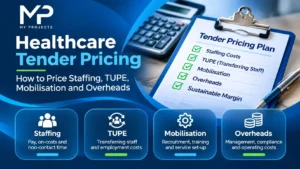
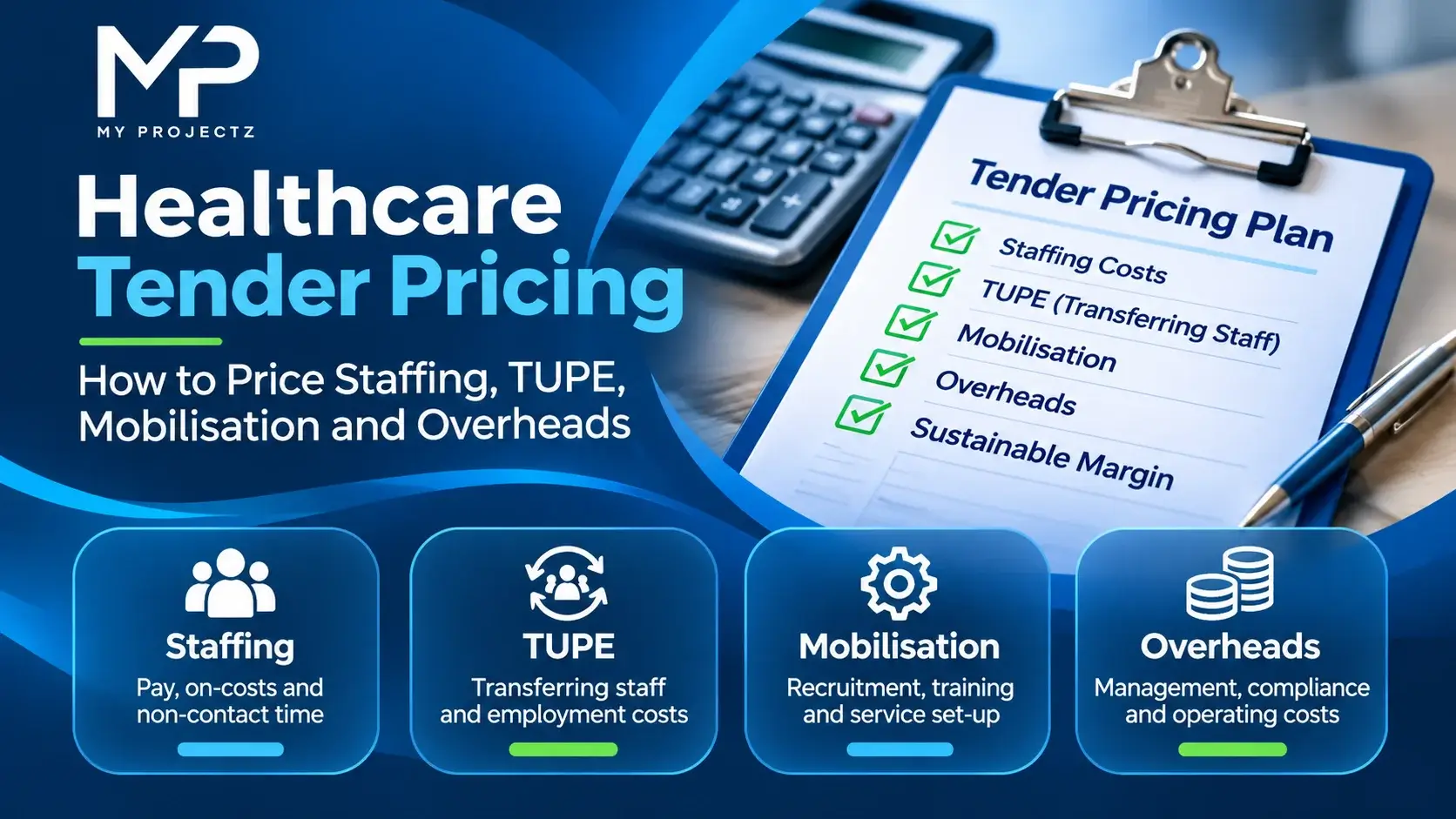
Healthcare Tender Pricing: How to Price Staffing, TUPE, Mobilisation and Overheads

Effective healthcare tender pricing is not simply about submitting the lowest hourly rate. Your price needs to fund the staffing model, employment costs, TUPE obligations, mobilisation, management and overheads promised elsewhere in your bid. A competitive price that cannot support safe delivery can turn a successful tender into an unsustainable contract.

For organisations preparing healthcare bids, professional healthcare tendering support can help ensure the commercial model and written response tell the same story.

In This Article

We explain the main costs healthcare providers should consider when pricing a tender, how TUPE and mobilisation can affect the calculation, and how to test whether the final price is commercially sustainable.

Healthcare Tender Pricing: Start With the True Staffing Cost

Base Pay and Enhancements

Calculate the actual pay required for every role, including shift enhancements, overtime, weekend cover and any contractual pay commitments.

Employment On-Costs

Add employer National Insurance, pension contributions, holiday costs and other employment obligations instead of treating the headline wage as the full cost.

Non-Contact Staff Time

Include supervision, training, team meetings, record keeping, travel and other paid time that cannot always be charged directly to service delivery.

TUPE Workforce Costs

Where TUPE may apply, review the available workforce information carefully and model transferring pay, benefits, hours and associated employment liabilities.

TUPE deserves particular attention. Cabinet Office guidance notes that poor or incomplete TUPE information can lead bidders to include additional risk pricing because they cannot confidently predict the workforce cost after transfer.

Your pricing should also reflect the staffing and resources described in your tender writing support response. Promising additional managers, supervision or technology without funding them creates an obvious commercial gap.

Add Mobilisation and Business Overheads

Recruitment and Onboarding

Cost any recruitment, DBS checks, induction and pre-employment activity required to have the correct workforce ready before the contract begins.

Training and Equipment

Include mandatory training, uniforms, devices, software, care systems and specialist equipment needed to meet the specification from mobilisation onwards.

Management and Compliance

Allow for registered management, supervision, quality assurance, audits, safeguarding, reporting and governance required throughout the life of the contract.

Operating Overheads

Include insurance, office costs, HR, finance, administration, technology, travel and other central costs needed to support reliable service delivery.

Mobilisation should not be treated as free preparation. Government pricing guidance recognises establishment and mobilisation as genuine contract costs, and these may need to be recovered through milestones, an initial charge or the wider contract price depending on the tender structure.

A Simple Healthcare Tender Pricing Formula

A useful starting point is:

Direct staffing costs

  • Employment on-costs  &  Non-contact delivery costs
  • Mobilisation costs &  Allocated overheads
  • Reasonable risk provision 
  • Sustainable margin
    = Tender price

The exact calculation will depend on whether the buyer requests an hourly rate, weekly rate, unit price, annual contract value or another pricing structure.

Test the Price Before You Submit

Match Price to Delivery

Check that every important promise in your method statements has enough staffing, management, technology and resources allocated within the financial model.

Stress-Test Your Assumptions

Test what happens if staffing costs increase, utilisation falls, recruitment takes longer or another reasonable delivery assumption changes during the contract.

Follow the Pricing Matrix

Complete the buyer’s pricing schedule exactly as requested and make sure every required cost, unit and calculation has been included correctly.

Protect Sustainability

Confirm the final price covers genuine delivery costs and an appropriate margin rather than reducing essential resources simply to submit the cheapest bid.

Government guidance for SMEs makes the same distinction: pricing should be competitive but realistic, covering direct costs, indirect costs, compliance expenses, cash-flow requirements and reasonable contingencies.

Before submitting, an independent Tender Review can help check whether the commercial model is consistent with the commitments made throughout the written response.

Before You Finalise Your Healthcare Tender Price

A useful final check is simple:

Price for Delivery, Not Just for the Evaluation

Winning a healthcare tender at an unsustainable price is not a successful outcome. The stronger approach is to understand the specification, model the real cost of delivery and submit a price you can explain and defend.

Choosing the right opportunity also matters. A structured Tender Search can help healthcare providers focus on contracts that fit their services, geography and operational capacity before committing resources to a bid.

Need Support With Your Healthcare Tender?

My Projectz can support healthcare providers with tender requirements, bid responses, pricing considerations and final tender reviews, helping teams prepare clearer and more commercially considered submissions.

Leave a Reply

Your email address will not be published. Required fields are marked *