


Understand the NHS Provider Selection Regime
Understand the NHS Provider Selection Regime, how healthcare contracts are awarded in England and how your organisation can prepare.
NHS Provider Selection Regime: A Guide for Healthcare Providers
The NHS Provider Selection Regime (PSR) governs how specified public bodies arrange certain healthcare services in England. It came into force on 1 January 2024. However, not every contract involves an open tender. Your approach depends on the selection process and the buyer’s requirements.
In This Article
This guide explains who the regime applies to, how its five selection processes work and what providers need to prepare. It also covers finding opportunities and the difference between the PSR and the Procurement Act 2023.
What Is the NHS Provider Selection Regime?
The Health Care Services (Provider Selection Regime) Regulations 2023 establish different award routes.
For example, a commissioner may retain a suitable existing provider if the relevant conditions are met. In contrast, a competitive process invites bids from eligible providers.
Which Services Does the NHS Provider Selection Regime Cover?
The regime covers specified healthcare services arranged by NHS England, integrated care boards (ICBs), NHS trusts, NHS foundation trusts, local authorities and combined authorities in England.
For example, certain mental health and community health services can fall within its scope.
However, standalone social care services, such as domiciliary care, are outside the regime. Mixed health and social care contracts may qualify if they meet the legal conditions.
Our Healthcare Tendering service can help you understand the requirements of relevant healthcare opportunities.
The Five NHS Provider Selection Regime Processes
Selection process | How it works |
|---|---|
Direct Award A | The existing provider is the only provider capable of delivering the service. |
Direct Award B | Patients have unrestricted choice, and all providers meeting the requirements are offered contracts. |
Direct Award C | The existing provider meets the current contract requirements to a sufficient standard. In addition, it is likely to meet the new requirements, and the arrangements are not changing considerably. |
Most Suitable Provider | The commissioner identifies the most suitable provider without running a competitive tender, where this route is permitted. |
Competitive Process | Providers submit bids for evaluation. Also, this process must be used when establishing a PSR framework agreement. |
Direct award A or B must be used when its conditions apply. However, the other routes depend on the circumstances and the rules governing the selection.
What Are the Five NHS Provider Selection Regime Criteria?
Under direct award C, the most suitable provider process and the competitive process, commissioners must consider five key criteria.
Quality and Innovation
Show how you deliver safe, effective care and improve services.
Value
Explain how your proposed costs support the quality and outcomes of care.
Social Value
Show how your service can benefit the wider community.
ntegration, Collaboration and Service Sustainability
Demonstrate how you work with local partners and maintain reliable services.
Improving Access, Reducing Health Inequalities and Facilitating Choice
Explain how you address barriers to care and support patient choice.
However, there is no universal weighting for these criteria. Therefore, read the buyer’s assessment requirements carefully.
Our Tender Writing team can help you prepare evidence-led responses.
How to Find NHS Provider Selection Regime Opportunities
First, monitor Find a Tender for contract notices and notices of intent to use the most suitable provider process. Also, check the procurement portals used by relevant commissioners.
For example, if a notice announces the most suitable provider process, follow its instructions and make your organisation known promptly.
The commissioner cannot finish identifying potential providers until at least 14 days after the day it submits the notice for publication.
However, do not assume that every notice invites a bid.
Our Tender Search service can help you identify relevant opportunities.
How Can Healthcare Providers Prepare for PSR Contracts?
First, check the eligibility requirements and applicable registration obligations. Next, prepare evidence of service quality, staffing, financial capacity and local partnership arrangements.
In addition, incorporated providers can check their registered details through Companies House.
Before submitting a response, check that your evidence and pricing match the buyer’s requirements.
Our Tender Review service can help identify gaps before submission.
Frequently Asked Questions
01 Does the PSR apply across the UK?
No. The NHS Provider Selection Regime relates to healthcare services in England. Therefore, providers should check the separate procurement rules that apply elsewhere in the UK.
02 Can new providers secure contracts under the PSR?
Yes. For example, suitable new providers may participate in competitive processes or make themselves known during the most suitable provider process. However, they must meet the applicable requirements.
03 Does the Procurement Act 2023 replace the PSR?
No. The PSR remains the regime for relevant healthcare procurement in England. In contrast, the Procurement Act 2023 generally governs new covered procurements outside its scope, subject to the relevant rules.
04 Can providers challenge a PSR award decision?
Eligible providers can make written representations during the applicable standstill period if they believe the regime was applied incorrectly. However, strict deadlines and conditions apply. Seek specialist legal advice promptly if needed.
04 Do PSR contracts always require tender writing?
No. Some routes do not require a competitive bid. However, providers may still need to demonstrate their suitability and supply evidence requested by commissioners.
Need Support With Your Next Healthcare Tender?
Understanding the PSR helps you identify suitable opportunities and prepare relevant evidence. At My Projectz, we help healthcare providers find opportunities, develop responses and review submissions. Book a free 30-minute consultation to discuss your requirements.
- admin
- November 25, 2026
- No Comments
NHS Provider Selection Regime: A Guide for Healthcare Providers
Blog [Post] Understand the NHS Provider Selection Regime Understand the NHS Provider Selection Regime, how healthcare contracts are awarded in England and how your organisation can prepare. Article Details Facebook

- admin
- November 25, 2026
- No Comments
Reablement Tenders UK: How Care Providers Can Find and Apply
Blog [Post] Find and Bid for Reablement Contracts Reablement tenders UK care providers can apply for offer opportunities to deliver independence-focused care. Discover how to find contracts and prepare competitive

- admin
- November 24, 2026
- No Comments
Mental Health Tenders UK: How to Find and Apply
Blog [Post] Find the Right Mental Health Tenders Explore mental health tenders UK providers can apply for, understand buyer requirements and prepare stronger bids for NHS and council contracts. Article
- admin
- November 24, 2026
- No Comments
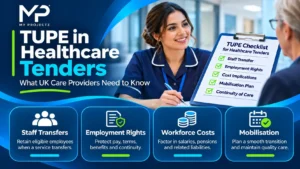
TUPE in Healthcare Tenders: A Guide for Care Providers
Blog [Post] Understand TUPE Before You Bid Understand TUPE in healthcare tenders, manage staff transfers and workforce costs, and prepare for a smooth transition while maintaining continuity of care. Article

- admin
- November 19, 2026
- No Comments
Tender Writing Cost UK: Fees, Pricing & What to Expect
Blog [Post] Understanding UK Tender Writing Fees Article Details Facebook Linkedin X-twitter Instagram Tiktok Whatsapp How Much Does Tender Writing Cost in the UK? Tender writing in the UK can

- admin
- November 19, 2026
- No Comments
Tender Scoring Criteria Explained: How UK Buyers Evaluate Bids
Blog [Post] How UK Buyers Score Your Tender Article Details Facebook Linkedin X-twitter Instagram Tiktok Whatsapp Tender Scoring Criteria Explained: How UK Buyers Evaluate Bids Tender scoring criteria determine how